AI News selected for Professionals and Decision Makers
Primary Research Stream

ClinLens: Towards Long-Horizon Coding Agents for Longitudinal Multimodal Clinical Data Science

06:00 · July 30, 2026 · arXiv cs.AI RSS

ClinLens: Towards Long-Horizon Coding Agents for Longitudinal Multimodal Clinical Data Science

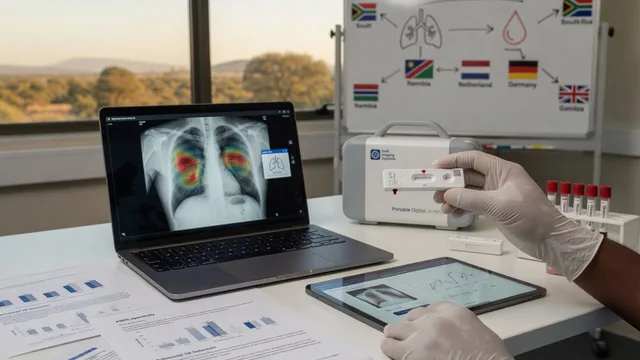
Clinical data-science agents must transform heterogeneous longitudinal records into auditable analyses, yet existing benchmarks largely isolate medical question answering, structured-table reasoning, or generic scientific repositories. We introduce CLINLENS, a benchmark of 200 executable tasks over five linked MIMIC resources spanning structured electronic health records, notes, electrocardiograms, chest radiographs, and echocardiograms. A 4 x 5 taxonomy crosses four patient-time scopes with five analysis capabilities. Program-first reverse synthesis pairs each bounded semi-raw package with an evaluator-private reference workflow and checks required artifacts, cohort and temporal semantics, and the final answer. On a fixed 126-task suite, the strongest of 24 standardized model-scaffold configurations achieves 56.3% scope-macro STRICTPASS despite 100% EXECSUCCESS. For reference, a separately configured coding agent solves 83 of 126 tasks, while five biomedical systems adapted to GPT-4o-mini reach at most 2.9% scope-macro STRICTPASS. These results expose a substantial gap between runnable submissions and correct clinical analyses.

Summary

ClinLens is a benchmark that evaluates coding agents on long-horizon clinical data-science tasks requiring longitudinal, multimodal records. It assembles 200 executable tasks from five linked MIMIC resources that retain structured electronic health records, clinical notes, electrocardiograms, chest radiographs, and echocardiograms without flattening them into pre-joined tables. Each task supplies a natural-language request together with a bounded package of semi-raw files; the agent must produce specified artifacts and a final answer while respecting patient identifiers, encounter hierarchies, and temporal windows.

Tasks are organized by a 4 × 5 taxonomy that crosses four patient-time scopes—whole-patient, admission, ICU-stay, and event or study—with five analysis families: profiling, association analysis, event-aligned change estimation, prediction, and phenotyping. Construction follows a program-first reverse-synthesis procedure that generates each task from an evaluator-private reference workflow, enabling automated checks on cohort definitions, temporal constraints, artifact schemas, and answer correctness.

On a fixed 126-task subset, the strongest of 24 standardized model-scaffold combinations reaches 56.3 percent scope-macro StrictPass while attaining 100 percent ExecSuccess. A separately tuned coding agent solves 83 of the 126 tasks, whereas five biomedical systems adapted to GPT-4o-mini achieve at most 2.9 percent StrictPass. The results therefore isolate a persistent gap between runnable code and analyses that satisfy the required clinical semantics, cohort semantics, and answer fidelity.

Why it matters

This research is highly relevant for Dutch AI researchers and clinical data scientists developing healthcare LLMs, as it provides a rigorous benchmark for evaluating the actual correctness of multimodal AI agents. This aligns with the Netherlands' strong emphasis on transparent, reliable, and ethically sound AI deployment in medical settings, especially under the EU AI Act.
More in this beat
chest-x-rayClinLenscoding-agentselectronic-health-recordsevaluation-benchmarksexperimental-benchmarksmedical-aimimic
FedPref: Federated Preference Learning for Structured Radiology Report Extraction

06:00 · August 19, 2026

FedPref: Federated Preference Learning for Structured Radiology Report Extraction

Strong actionability for Dutch/EU hospitals under GDPR constraints; directly addresses privacy-preserving collaboration on medical data with unequal distributions, high technical depth, novelty in combining federated learning with preference optimization, and full reproducibility via GitHub.

Relevance 82 · Audience 90

How Compliant is Sepsis Treatment? An Expert-Guided Neuro-symbolic Pipeline for Generating Clinical Compliance Insights

06:00 · August 17, 2026

How Compliant is Sepsis Treatment? An Expert-Guided Neuro-symbolic Pipeline for Generating Clinical Compliance Insights

The paper's focus on transparent, neuro-symbolic AI directly aligns with the Dutch and EU emphasis on trustworthy and explainable AI in safety-critical domains like healthcare. Dutch AI researchers and medical centers can leverage this hybrid methodology to develop compliant clinical decision-support systems that adhere to strict EU regulations.

Relevance 85 · Audience 95

Measuring Cross-Task Behavioral Consistency in Language Model Agents

06:00 · August 17, 2026

Measuring Cross-Task Behavioral Consistency in Language Model Agents

The article provides a novel, quantifiable method for assessing the reliability and behavioral consistency of AI agents, which is crucial for compliance with EU AI regulations and the Dutch focus on transparent AI. Researchers can directly apply the open-source BCM framework to evaluate and improve the predictability of enterprise AI deployments.

Relevance 85 · Audience 95

FraudBench: Stress-Testing Policy-Grounded Banking Agents Against Adaptive Fraud

06:00 · August 20, 2026

FraudBench: Stress-Testing Policy-Grounded Banking Agents Against Adaptive Fraud

This research is highly relevant for Dutch AI researchers and the strong local fintech and banking sector exploring customer-facing LLM agents. It provides a rigorous, reproducible framework to test agent compliance and security against fraud, aligning with strict EU financial and AI regulations.

Relevance 85 · Audience 95

ASI-Bench: At the Dawn of Artificial Superintelligence

06:00 · August 19, 2026

ASI-Bench: At the Dawn of Artificial Superintelligence

Offers a novel, high-depth evaluation framework that Dutch AI researchers and advanced labs can directly apply to measure progress toward autonomous scientific agents, aligning with the Netherlands' strengths in ethical AI and SME-driven innovation.

Relevance 62 · Audience 88

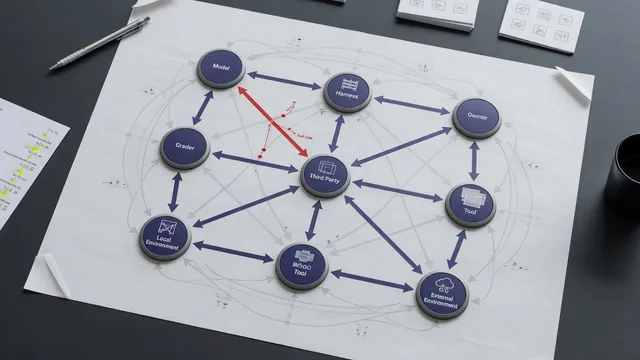
Model or Harness? An Interaction-Centric Taxonomy for Localizing Agent Failures

06:00 · August 3, 2026

Model or Harness? An Interaction-Centric Taxonomy for Localizing Agent Failures

This research is highly relevant for Dutch AI researchers and developers building autonomous agents, as it provides a structured methodology for diagnosing and repairing complex AI systems. It aligns well with the EU's focus on AI robustness, transparency, and safety by offering a standardized way to trace and mitigate agent failures.

Relevance 85 · Audience 95

Marking the Wrong Symptoms: Evaluating LLM Watermarks in Medical Texts

06:00 · July 24, 2026

Marking the Wrong Symptoms: Evaluating LLM Watermarks in Medical Texts

Highly actionable for Dutch healthcare AI teams and regulators: demonstrates that generic benchmarks mask clinically critical failures and recommends domain-specific evaluation plus answer-only watermarking for reasoning models. Aligns with Netherlands' focus on ethical, transparent AI deployment under EU rules.

Relevance 78 · Audience 85

Real-world evidence and AI: How EHR data is reshaping drug development decisions

16:59 · July 22, 2026

Real-world evidence and AI: How EHR data is reshaping drug development decisions

This article is highly relevant for Dutch AI researchers in healthcare and pharma, as it details the European Medicines Agency's (EMA) DARWIN EU network and regulatory stances on AI-extracted data. It provides actionable insights into deploying transformer-based NLP models for EHR mining within the EU regulatory context.

Relevance 75 · Audience 80