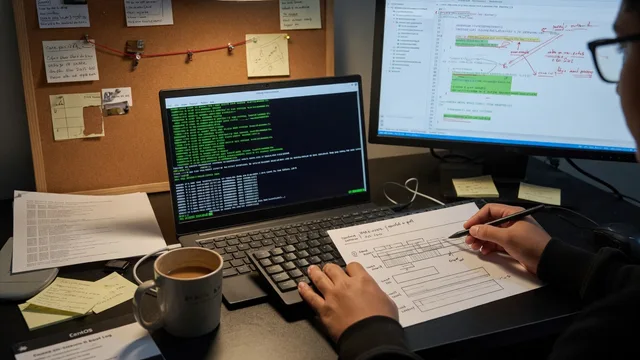
When Vibe Hacking Turns AI into the Junior Hacker Every Adversary Always Wanted
13:30 · August 4, 2026 · Hacker News AI Section
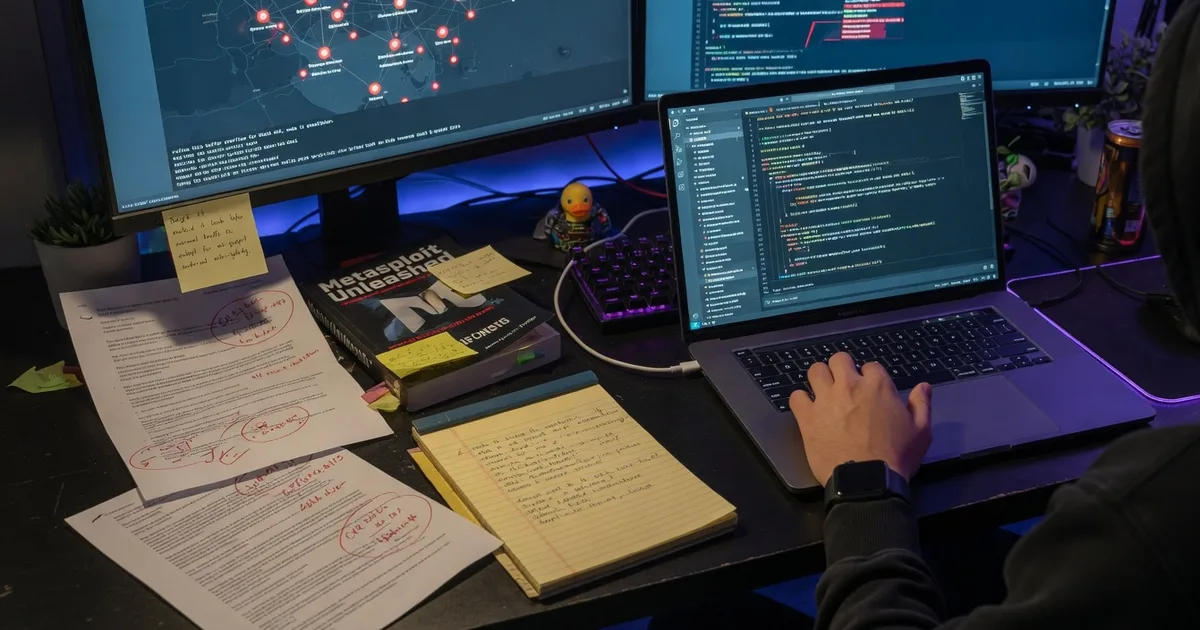
The cybersecurity industry has spent decades assuming that offensive capability scales with technical expertise. That assumption is starting to break. Security teams have long estimated risk by ranking attacker sophistication. Nation-state actors sat at one end. Organized criminal groups followed. Inexperienced attackers, dismissed as "script kiddies," sat at the other end, running public
Summary
Generative AI is eroding the long-standing link between attacker sophistication and technical expertise. Where security teams once ranked threats along a spectrum from nation-state operators to inexperienced script kiddies who merely reused public tools, large language models now compress the time required to research vulnerabilities, interpret exploit mechanics, generate prototype code, and adapt payloads to new targets. The result is a broader population of attackers who can reach operational capability without years of reverse-engineering experience.
This shift is captured in the term “vibe hacking,” the offensive-security counterpart to vibe coding. Instead of writing exploits from scratch, an attacker can issue iterative natural-language prompts that guide an AI assistant through reconnaissance, payload refinement, error debugging, and environment-specific customization. The article notes that while complex intrusions still require human judgment and persistence, the amount of specialized knowledge needed to begin meaningful offensive activity has dropped sharply.
Traditional point-in-time assessments are therefore becoming insufficient. As the interval between vulnerability disclosure and exploitation shrinks, organizations must move from periodic scanning and testing to Continuous Threat Exposure Management. Within that framework, Adversarial Exposure Validation and Penetration Testing as a Service repeatedly exercise the same attack paths an AI-assisted adversary would attempt, confirming that compensating controls remain effective and that security investments actually reduce exploitable risk rather than merely producing additional findings.
The article concludes that experienced security professionals retain a central role. Automation can accelerate analysis and surface possibilities, yet determining whether a given weakness represents material business risk still depends on contextual understanding of operational dependencies, attacker objectives, and organizational priorities that current models lack. Defense therefore hinges on continuously validating controls against an expanded and faster-moving set of credible threats.
Why it matters
This article is highly relevant for security professionals as it highlights the evolving AI-driven threat landscape where the technical barrier to entry for attackers is significantly lowered. It provides actionable strategic advice on shifting from point-in-time security assessments to continuous threat exposure management, which is crucial for Dutch enterprises defending against AI-assisted cyberattacks.