When Retrieval Fails Before It Begins: Structurally Indirect Prerequisite Eviction as a Retention Failure in Agentic Memory
06:00 · August 24, 2026 · arXiv cs.AI RSS

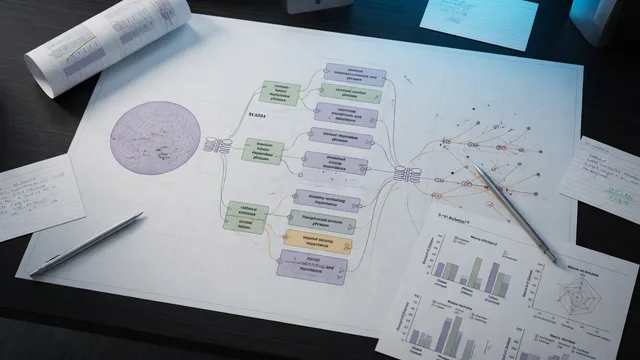
Agentic memory under a fixed budget involves two stages: retention and retrieval. Existing retrieval-centered paradigms implicitly assume necessary evidence survives eviction, but we challenge this by isolating a pre-retrieval failure mode: structurally indirect prerequisite eviction, in which upstream blocks weakly aligned with the query are discarded under budget pressure. We provide an operational definition of this failure, a reproducible deterministic benchmark, and per-seed trace diagnostics. Finally, we evaluate Dependency-aware Semantic Garbage Collection (DSGC), a one-hop graph-aware rule. In our main suite, DSGC improves full-chain retention from 0.03 to 0.90 under a lexical encoder and from 0.23 to 1.00 under a sentence encoder. Robustness checks then identify the budget and scaling regimes where the one-hop rule holds or degrades. Our released pipeline and failure postmortem support mechanistic analysis of retention before retrieval as a distinct failure boundary.
Summary
The article examines a distinct failure mode in agentic memory systems that operate under a fixed token budget. Retention and retrieval are treated as separate stages: retention decides which context blocks survive eviction, while retrieval ranks what remains. The work isolates structurally indirect prerequisite eviction, a pre-retrieval failure in which a necessary upstream block is discarded because its surface similarity to the current query is lower than that of a downstream block that depends on it. Once evicted, the block cannot be recovered by any subsequent retrieval step.
To make the failure reproducible, the author supplies an operational definition that distinguishes it from retrieval errors, simple recency-based forgetting, and reasoning mistakes. A deterministic benchmark provides fixed seeds, explicit prerequisite edges, and chain-level targets whose joint retention is required to answer each query. Trace diagnostics record, for each failure, the evicted block, the competing block that displaced it, and the similarity margin under the chosen encoder.
The proposed mitigation is Dependency-aware Semantic Garbage Collection (DSGC), a one-hop retention rule inspired by tracing garbage collection. Query-similar blocks serve as roots; liveness then propagates along declared prerequisite edges to protect the immediate structural predecessors that would otherwise be evicted. In the main experimental suite, DSGC raised full-chain retention from 0.03 to 0.90 with a lexical encoder and from 0.23 to 1.00 with a sentence encoder. Additional robustness checks map the budget and scaling regimes in which the one-hop rule remains effective or begins to degrade.
The released pipeline and per-seed postmortem traces allow direct inspection of retention decisions before retrieval occurs, establishing a controlled base case for studying structural reachability separately from graph induction or downstream ranking.
Why it matters
This research is highly relevant for AI researchers and advanced practitioners developing long-horizon LLM agents. It provides a novel, reproducible methodology to solve memory retention failures, directly actionable for Dutch AI labs and enterprises building advanced agentic systems.