AI News selected for Professionals and Decision Makers
Primary Research Stream

Self-GC: Self-Governing Context for Long-Horizon LLM Agents

06:00 · July 2, 2026 · arXiv cs.AI RSS

Self-GC: Self-Governing Context for Long-Horizon LLM Agents

Long-horizon LLM agents accumulate tool results, files, plans, and user constraints that are too structured to be treated as a disposable text suffix. Current systems mostly rely on in-run heuristics such as chronological pruning and tool-output masking, or on final self-summary near a context limit. Heuristics are cheap but blind to future dependencies; summaries preserve narrative state but often hide exact evidence, locators, and editable artifacts. We present Self-GC, where GC denotes self-governing context while deliberately echoing garbage collection: the system does not merely reclaim unused tokens, but governs the lifecycle of agent context objects. Self-GC turns user turns, tool spans, and skill state into indexed objects; asks a side-channel planner to propose fold, mask, and prune actions; and lets the harness enforce recoverable sidecars, safe commit boundaries, and cache-aware commit. On a 33-session Hard Set, Self-GC prunes 43.95% of prefix tokens while leaving 84.85% of future continuations unaffected, compared with no-impact rates of 54.55% to 69.70% for heuristic baselines. On a 332-session production-derived suite, three planner backbones reach no-impact rates of 91.27% to 94.58%, while baselines remain at 77.71% to 87.46%. In production, an online account-level split reduces daytime average input tokens by 10% to 15%, with peak reductions near 20%. These results point to context management as runtime lifecycle control over indexed, recoverable objects rather than post hoc text cleanup.

Summary

Self-GC reframes context management for long-horizon LLM agents by treating accumulated elements—user turns, tool outputs, files, plans, and skill state—as indexed runtime objects rather than a linear token buffer. Unlike conventional heuristics that prune by age or length, or late-stage summarization that collapses evidence into non-recoverable prose, the system maps these elements to stable identifiers and delegates decisions about their future utility to a side-channel planner. The planner proposes fold, mask, or prune operations, while a lightweight harness validates targets, maintains safe commit boundaries, stores folded payloads in recoverable sidecars, and avoids commits that would disrupt prefix caching.

Evaluations on a 33-session Hard Set show the approach pruning 43.95 percent of prefix tokens while leaving 84.85 percent of future continuations unaffected, outperforming heuristic baselines whose no-impact rates range from 54.55 to 69.70 percent. On a larger 332-session production-derived suite, three different planner backbones achieve no-impact rates between 91.27 and 94.58 percent, compared with 77.71 to 87.46 percent for the same baselines. In live deployment, an account-level rollout reduced daytime average input tokens by 10 to 15 percent, with peaks near 20 percent on covered traffic.

The design deliberately echoes garbage collection: rather than simple reclamation, Self-GC governs object lifecycles through explicit recoverability and dependency awareness. This separation lets the model supply semantic judgment while the harness preserves protocol invariants, offering a portable layer that integrates with existing agent harnesses via a modest context-engine hook.

Why it matters

This research provides a highly technical and novel solution to context window limitations and token costs in LLM agents. For Dutch AI researchers and enterprises, implementing such lifecycle control mechanisms can significantly optimize the scalability and cost-efficiency of autonomous AI deployments.


More in this beat
context-managementinference-performancellm-agentsmlops-deploymentnovel-methodologiesobservability-updatesQuick Implementation TakeawaysSelf-GC
CogniConsole: Externalizing Inference-Time Control as a Formal Abstraction for Reliable LLM Interactions

06:00 · July 13, 2026

CogniConsole: Externalizing Inference-Time Control as a Formal Abstraction for Reliable LLM Interactions

This research is highly relevant for Dutch AI researchers and engineers building enterprise LLM systems, as it offers a concrete methodology to improve AI reliability and predictability. This aligns strongly with the Netherlands' and EU's regulatory focus on transparent, trustworthy, and controllable AI systems without requiring massive computational resources for model scaling.

Relevance 85 · Audience 95

How Far Can Root Cause Analysis Go on Real-World Telemetry Data?

06:00 · July 16, 2026

How Far Can Root Cause Analysis Go on Real-World Telemetry Data?

This research is highly relevant for AI researchers and AIOps practitioners in the Netherlands managing complex cloud-native environments. It provides actionable insights into improving LLM-based multi-agent systems for automated diagnostics, a critical area for Dutch tech enterprises and infrastructure providers.

Relevance 85 · Audience 95

Coupled Hierarchical Search over Topology and Execution for Agentic Workflow Synthesis

06:00 · July 27, 2026

Coupled Hierarchical Search over Topology and Execution for Agentic Workflow Synthesis

This research provides Dutch AI researchers and advanced practitioners with a highly novel, resource-efficient methodology for building autonomous LLM agents. Its training-free approach lowers computational overhead, aligning well with the Dutch and broader EU focus on sustainable, accessible AI solutions for SMEs and enterprise deployments.

Relevance 85 · Audience 95

Risk Is Not the Target: A Monotonic Framework for Evaluating Wildfire Operational Risk Signals

06:00 · July 27, 2026

Risk Is Not the Target: A Monotonic Framework for Evaluating Wildfire Operational Risk Signals

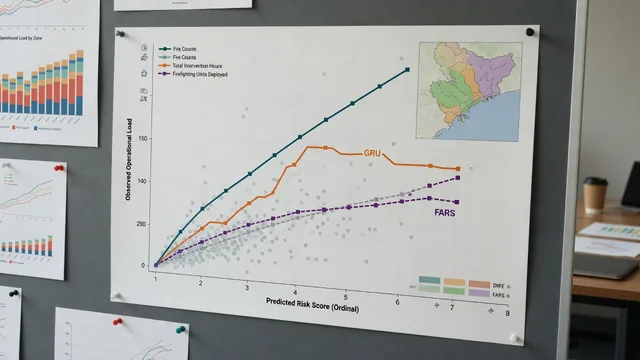
This research is highly relevant for Dutch AI researchers focusing on operational risk, climate adaptation, and emergency response. The proposed monotonic evaluation framework and the insights into hybrid LLM-predictive architectures can be directly adapted to other risk domains critical to the Netherlands, such as flood management and infrastructure monitoring.

Relevance 75 · Audience 95

Deterministic Replay for AI Agent Systems

06:00 · July 21, 2026

Deterministic Replay for AI Agent Systems

Directly actionable for Dutch AI researchers and advanced practitioners working on agent systems, offering high technical depth, reproducibility resources, and alignment with EU emphasis on transparent, reliable AI.

Relevance 85 · Audience 90

Model Routing Is Simple. Until It Isn’t.

19:27 · July 15, 2026

Model Routing Is Simple. Until It Isn’t.

Directly actionable for ML Engineers building production routers: covers latency/VRAM-adjacent serving realities, cost-accuracy tradeoffs, and EU-relevant compliance/data residency rules. Provides concrete metrics and an optimization approach applicable to Dutch SME and enterprise deployments.

Relevance 78 · Audience 85

Toward Auditable AI Scientists: A Hypothesis Evolution Protocol for LLM Agents

06:00 · July 13, 2026

Toward Auditable AI Scientists: A Hypothesis Evolution Protocol for LLM Agents

This research is highly relevant to the Dutch AI market's strong emphasis on transparent, ethical, and auditable AI systems. It provides researchers with a concrete methodology to build explainable AI scientists, aligning with EU regulatory standards for AI traceability and accountability.

Relevance 85 · Audience 95