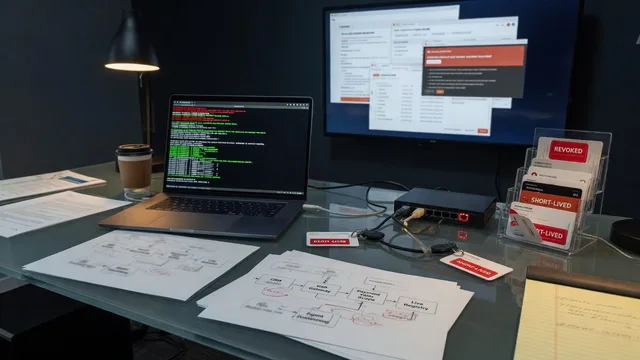
Orphaned AI Agents: How to Find Hidden Access Risks Inside Your Network
17:33 · June 18, 2026 · Hacker News AI Section

If an autonomous AI agent interacts with your company's core intellectual property today, can your security team instantly name the person who authorized it? For most enterprises, the answer is a simple no. The rush to adopt internal AI tools has left a massive trail of administrative debt: orphaned agents (AI tools left running after their creator leaves the company) and standing privileges (
Summary
The article examines a growing accountability gap created when autonomous AI agents retain access to sensitive corporate resources after the employees who deployed them have departed. These orphaned agents continue to operate with standing privileges—permanent tokens or permissions that were never revoked—granting them ongoing interaction with databases, source code repositories, and other intellectual property without active oversight.
Traditional identity and access management systems struggle to address this because they treat AI tools as static applications. In practice, an agent can independently retrieve large volumes of data or execute repeated operations, yet security controls lack visibility into the original human identity that authorized the agent. Without that linkage, it becomes impossible to determine whether an action remains legitimate once the creator’s employment has ended.
The resulting administrative debt compounds as organizations scale internal AI use. Finding stray scripts or agents is only part of the challenge; the harder task is mapping each one back to a current, accountable owner so that access can be reviewed or revoked. The text argues that effective mitigation requires a unified control plane capable of correlating human, machine, and AI identities rather than managing them in isolation.
Why it matters
This article is highly relevant for security and privacy professionals as it addresses a critical vulnerability in AI access management and data governance. For Dutch enterprises, mitigating the risks of unmonitored AI agents is essential for protecting intellectual property and ensuring compliance with strict EU data protection regulations like the GDPR and the AI Act.