Improving Fable 5's biology safeguards
02:00 · August 7, 2026 · Anthropic News
Summary
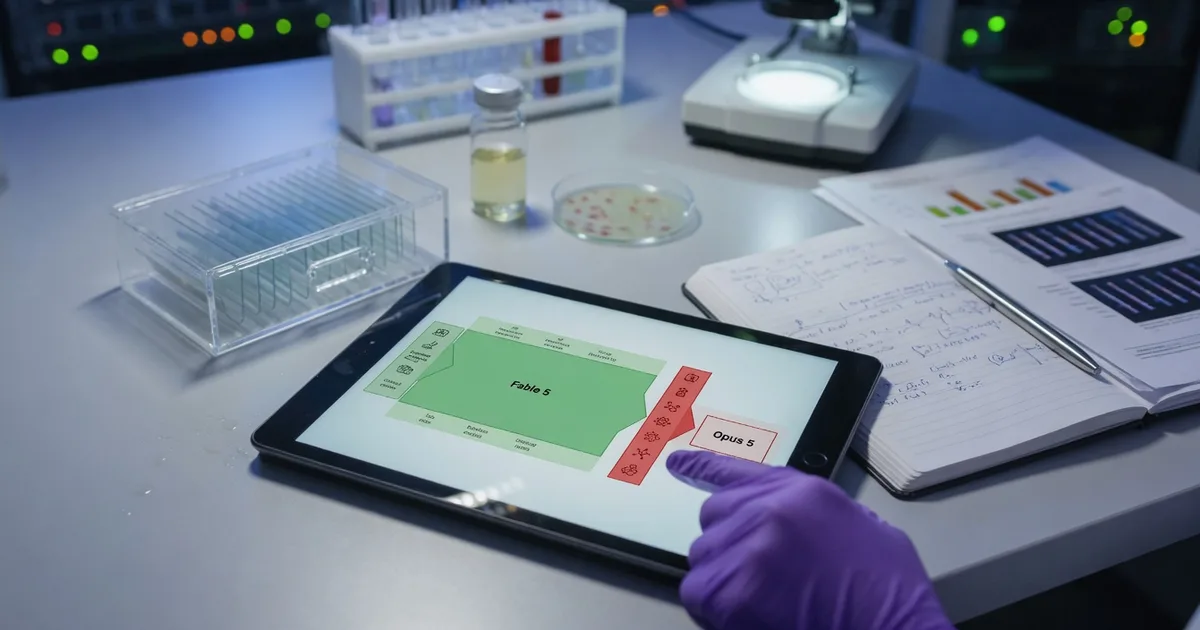
Anthropic has refined the safety classifiers that govern biology-related queries to its Claude Fable 5 model. The changes cut the rate at which legitimate requests trigger a fallback to the less capable Opus 5 model by roughly 85 percent across product surfaces. As a result, Fable 5 can now handle a broader set of routine biology tasks without interruption, including the interpretation of lab results, symptom analysis, and educational queries, while also offering greater support to clinicians on standard clinical work.
The classifiers continue to intercept requests that involve dual-use topics such as virology, toxicology, and molecular design. These categories remain routed to Opus 5 because the company judges that Fable 5’s frontier-level performance on complex biological operations could supply meaningful assistance to malicious actors seeking to develop biological weapons. The initial launch deliberately applied a broad classifier to allow general release of the model while further safeguards were developed; the present update narrows that scope through a rewritten constitution that explicitly carves out benign uses, followed by new training data and retraining informed by internal and external expert review.
Anthropic notes that distinguishing beneficial from harmful intent is inherently difficult in biology, since legitimate research sometimes requires work with dangerous pathogens or toxins. The company states it will keep blocking professional-level dual-use queries until trusted-access mechanisms can be scaled, and it continues to solicit feedback to reduce remaining false positives without increasing exposure to severe misuse risks.
Why it matters
This update is crucial for product teams building health-tech or educational applications using Anthropic's models, as it directly impacts query routing, user experience, and fallback rates. It also provides valuable insights into implementing ethical AI safeguards and managing dual-use risks, aligning with the Dutch AI market's focus on responsible AI.