AI News selected for Professionals and Decision Makers
Primary Research Stream

Embodied Operators and Benchmarking: Toward Reusable and Deployable Embodied Intelligence Systems

06:00 · July 7, 2026 · arXiv cs.AI RSS

Embodied Operators and Benchmarking: Toward Reusable and Deployable Embodied Intelligence Systems

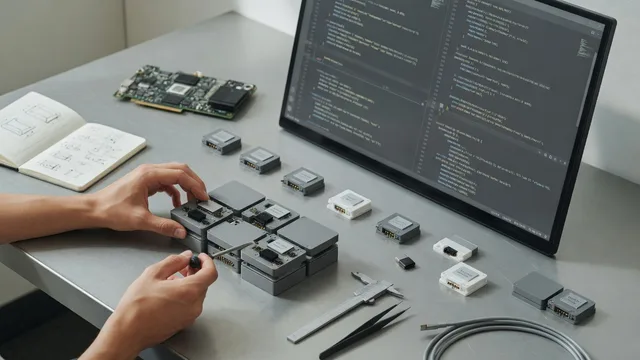
Embodied intelligence systems require not only end-to-end policy models, but also reusable functional modules that transform multimodal observations, robot states, human demonstrations, and task contexts into structured representations, decisions, trajectories, control references, and system services. This work defines these modules as embodied operators and studies them as independent yet composable units in embodied intelligence pipelines. We clarify their definition boundary, emphasizing task semantics, standardized input-output contracts, deployability, reusability, and multi-layer optimizability. We further construct a taxonomy covering five categories: detection and segmentation, spatial localization and 3D understanding, hand motion recovery, embodied foundation models and task-decision operators, and planning, control, and system support operators. For each category, we summarize representative functions, technical paradigms, application roles, and practical limitations. Beyond taxonomy, we propose a multi-dimensional benchmark framework that evaluates embodied operators in terms of correctness, end-to-end efficiency, resource usage, temporal stability, portability, interface compatibility, deployment reliability, and downstream task utility. We also discuss workflow-level operator acceleration and open challenges in operator composition, data standardization, world models, VLA safety, edge deployment, and real-world application value. Overall, this work argues that embodied operators should be optimized and evaluated as holistic deployable components, providing a foundation for reusable, scalable, and verifiable embodied intelligence systems.

Summary

Embodied intelligence systems rely on more than end-to-end policy models. They also depend on reusable functional modules that convert multimodal observations, robot states, human demonstrations, and task contexts into structured representations, decisions, trajectories, control references, and system services. This paper defines these modules as embodied operators and treats them as independent yet composable units within larger pipelines. The authors stress that such operators must carry explicit task semantics, standardized input-output contracts, and measurable characteristics for deployability, reusability, and multi-layer optimization.

They organize the operators into a taxonomy of five categories: detection and segmentation, spatial localization and 3D understanding, hand motion recovery, embodied foundation models together with task-decision operators, and planning, control, and system support operators. For each category the paper reviews representative functions, prevailing technical approaches, typical roles in manipulation pipelines, and current practical limitations. The discussion focuses on manipulation-oriented scenarios and highlights how errors in intermediate outputs such as object poses, depth maps, or grasp trajectories can propagate through downstream learning and execution stages.

Beyond taxonomy, the authors introduce a multi-dimensional benchmarking framework that assesses operators on correctness, end-to-end efficiency, resource consumption, temporal stability, portability, interface compatibility, deployment reliability, and downstream task utility. They further examine workflow-level acceleration techniques and identify open challenges in operator composition, data standardization, world models, vision-language-action safety, edge deployment, and measurable real-world value. The central argument is that embodied operators should be optimized and evaluated as complete deployable components rather than isolated networks, thereby supporting the construction of reusable, scalable, and verifiable embodied intelligence systems.

Why it matters

The research is highly relevant for Dutch AI and robotics researchers, offering a standardized taxonomy and benchmarking framework for embodied AI. This modular approach aligns with the Netherlands' strong focus on scalable, verifiable, and deployable AI systems in high-tech industries and academia.


More in this beat
deployment-readinessembodied-agentsembodied operatorsevaluation-benchmarkspaper-key-findingsrobotic-graspingworld-models
Towards Evaluation of Implicit Software World Models in Coding LLMs

06:00 · June 29, 2026

Towards Evaluation of Implicit Software World Models in Coding LLMs

It provides AI researchers with a new framework for evaluating coding LLMs beyond standard metrics. For the Dutch AI ecosystem, which emphasizes efficient and robust AI engineering, improving how models predict execution resources is crucial for developing sustainable and optimized software.

Relevance 75 · Audience 90

Woodpecker Distillation: Weak Models Diagnose Reasoning Bugs in Strong Models

06:00 · August 7, 2026

Woodpecker Distillation: Weak Models Diagnose Reasoning Bugs in Strong Models

This paper is highly relevant for AI researchers in the Netherlands focusing on LLM reasoning, alignment, and compute-efficient training. The proposed weak-to-strong distillation method offers actionable insights for Dutch AI labs aiming to enhance model performance without relying solely on massive scaling.

Relevance 85 · Audience 95

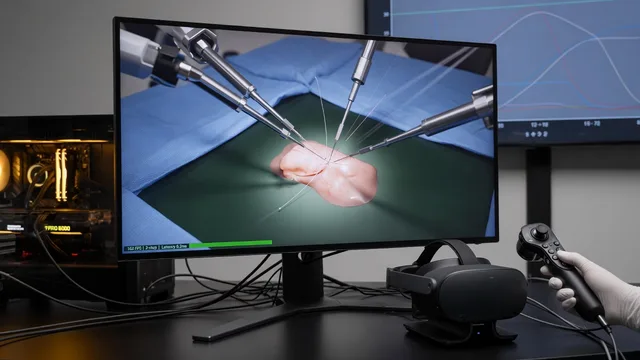
NVIDIA Cosmos-H-Dreams: Bringing Real-Time Generative Simulation to Surgical Robotics

11:32 · July 27, 2026

NVIDIA Cosmos-H-Dreams: Bringing Real-Time Generative Simulation to Surgical Robotics

Provides concrete implementation details on distillation, autoregressive rollout stability, few-step diffusion, and low-latency serving that directly address production constraints for ML engineers. Includes actionable training recipes and quantitative performance gains applicable to Dutch teams working on generative models or robotics.

Relevance 78 · Audience 85

Introducing Cosmos 3 Edge

17:58 · July 20, 2026

Introducing Cosmos 3 Edge

This article provides ML Engineers with actionable, open-source tooling and checkpoints for deploying state-of-the-art vision-language and world models on edge hardware. It directly addresses implementation challenges like memory constraints and real-time latency, which are highly applicable to the strong Dutch logistics, agriculture, and smart infrastructure sectors.

Relevance 85 · Audience 95

SPINE: Bridging the Cyber-Physical Gap with Agentic AI

06:00 · July 16, 2026

SPINE: Bridging the Cyber-Physical Gap with Agentic AI

This research is highly relevant for Dutch AI and robotics researchers, offering an open-source, agentic solution to accelerate Embodied AI deployment. Given the Netherlands' strong high-tech manufacturing and logistics sectors, reducing the friction of cyber-physical integration directly benefits local enterprise and academic labs.

Relevance 85 · Audience 95

NVIDIA Introduces New Jetson Thor Computers to Advance Mainstream Robotics and Edge AI

01:00 · July 16, 2026

NVIDIA Introduces New Jetson Thor Computers to Advance Mainstream Robotics and Edge AI

This article highlights crucial advancements in edge AI and robotics hardware, which are key growth areas for the Dutch AI market, particularly in logistics, agriculture, and smart retail. It provides a general AI audience with insights into how foundation models are transitioning from labs to real-world physical applications.

Relevance 85 · Audience 75

From Prompts to Contracts: Harness Engineering for Auditable Enterprise LLM Agents

06:00 · July 11, 2026

From Prompts to Contracts: Harness Engineering for Auditable Enterprise LLM Agents

Directly actionable for Dutch/EU teams building compliant LLM agents; aligns with Netherlands emphasis on ethical, transparent AI and EU regulatory needs for auditability. Offers novel, technically rigorous methodology with high reproducibility for researchers and advanced practitioners.

Relevance 85 · Audience 90

Cost-Effective Agent Harnesses for Abstract Reasoning and Generalization on ARC-AGI-1

06:00 · July 9, 2026

Cost-Effective Agent Harnesses for Abstract Reasoning and Generalization on ARC-AGI-1

This research is highly relevant for Dutch AI researchers and enterprises looking to deploy advanced reasoning capabilities cost-effectively. Its focus on open-weight models and architectural efficiency aligns with the Netherlands' push for sustainable, accessible, and transparent AI solutions without relying on massive compute budgets.

Relevance 85 · Audience 95