AI News selected for Professionals and Decision Makers
AI Security And Privacy Updates

Concentric AI Wants to Help Enterprises Find and Secure Sensitive Data Hiding in Documents

18:43 · August 18, 2026 · CX Today

Concentric AI Wants to Help Enterprises Find and Secure Sensitive Data Hiding in Documents

Enterprises are required to protect all of the sensitive information they process and store, but the challenge in addressing data security risks is often maintaining visibility into the data that is sprawled across their environments in various formats. Organizations need to understand what personal, financial, health and other regulated information they hold, where it is […]

Summary

Concentric AI has introduced a vision model within its Semantic Intelligence platform that classifies sensitive documents such as passport photo pages and driver licenses by recognizing consistent visual traits rather than extracting text. The approach works even when images are low-resolution or blurred and requires fewer computational resources than optical character recognition, which processes every pixel to convert characters into machine-readable form. Company-specific documents that share distinctive layouts can also be identified, and partners can train dedicated models for individual customer environments.

This capability addresses a long-standing gap in enterprise data discovery: unstructured and image-based files scattered across cloud storage, collaboration tools, and internal repositories often escape conventional classification systems. Without reliable identification of personal, financial, or regulated content, organizations cannot determine where sensitive material resides or who and what can reach it. The new model supplies an additional signal that complements existing metadata and text-based methods.

The need for improved visibility has become more urgent with the spread of generative AI and autonomous agents. These systems can ingest large volumes of data and act across multiple applications with limited oversight, amplifying the consequences of excessive permissions or incomplete classification. Enterprises must therefore map sensitive information, enforce role-appropriate access controls, and monitor both human and machine interactions. As Adam Spearing of ServiceNow has noted, the same authorization principles applied to employees must extend to AI agents so they reach only the data and systems required for their defined functions.

At the same time, the same AI techniques that aid legitimate discovery can be exploited by attackers for automated data extraction. Concentric AI’s emphasis on visual cues before text processing therefore forms part of a broader control layer that restricts agent access and supports governance frameworks. The ultimate effectiveness of such tools depends on how precisely classifications are linked to identity management, monitoring, and policy enforcement across the enterprise.

Why it matters

Directly addresses AI-driven data classification to mitigate security and privacy risks, actionable for Dutch teams handling GDPR and EU AI Act compliance. Provides practical guidance on controlling AI agent access to sensitive information, relevant for security and privacy professionals.


More in this beat
ai-governanceai-privacy-complianceconcentric-aidata-security-governancedocument-understandingidentity-governancevision-language-models
Why Workforce Experience Is Now a Data Protection Issue For Enterprises

17:19 · August 19, 2026

Why Workforce Experience Is Now a Data Protection Issue For Enterprises

This article is highly relevant as it addresses the critical security and privacy risks of "shadow AI" in the enterprise, a major concern for Dutch organizations striving for GDPR compliance. It provides actionable advice for security professionals on balancing employee productivity with robust data protection and vendor governance.

Relevance 85 · Audience 95

What Article 50 of the EU AI Act Means for European Marketing and Sales Leaders

17:02 · August 18, 2026

What Article 50 of the EU AI Act Means for European Marketing and Sales Leaders

This article is highly relevant for security and privacy professionals in the Netherlands as it details the compliance requirements of Article 50 of the EU AI Act regarding AI transparency. It provides actionable insights on how to guide marketing and sales teams in implementing necessary disclosures, labeling synthetic content, and maintaining customer trust while ensuring regulatory compliance.

Relevance 85 · Audience 80

Balancing AI security with privacy and GDPR

10:02 · July 28, 2026

Balancing AI security with privacy and GDPR

Strong EU/GDPR focus makes content immediately actionable for Dutch security teams implementing AI tools while ensuring regulatory compliance and privacy safeguards.

Relevance 85 · Audience 90

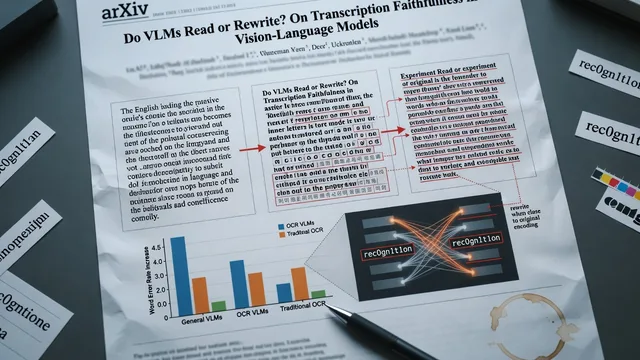
Do VLMs Read or Rewrite? On Transcription Faithfulness in Vision-Language Models

06:00 · July 27, 2026

Do VLMs Read or Rewrite? On Transcription Faithfulness in Vision-Language Models

This research is highly relevant for Dutch AI researchers and enterprises deploying VLMs for document understanding, particularly in sectors requiring strict transcription accuracy like legal, medical, and government digitization. It provides actionable insights into VLM hallucination mechanisms, aligning with EU AI Act requirements for model reliability and transparency.

Relevance 85 · Audience 95

Balancing AI security with privacy and GDPR

16:00 · July 22, 2026

Balancing AI security with privacy and GDPR

Directly addresses GDPR compliance and privacy risks in AI security deployments, offering actionable guidance highly relevant to Dutch and EU organizations. Provides practical recommendations for security and privacy professionals on balancing capabilities with regulatory obligations.

Relevance 85 · Audience 90

The Fastest Path to AI Adoption Runs Through Security

13:58 · July 22, 2026

The Fastest Path to AI Adoption Runs Through Security

This article is highly relevant for security and privacy professionals as it provides actionable strategies for managing shadow AI and establishing effective AI governance. It emphasizes the shift from restrictive policies to enabling secure AI adoption, which is crucial for Dutch enterprises aiming to innovate while maintaining compliance and data protection.

Relevance 85 · Audience 95

Top 10: AI Privacy Tools

10:30 · July 22, 2026

Top 10: AI Privacy Tools

This article is highly relevant for Dutch security and privacy professionals as it provides actionable tooling options to ensure AI deployments comply with strict EU data protection regulations like GDPR and the AI Act. The listed platforms offer practical solutions for mitigating data leakage, managing PII, and securing generative AI workflows in enterprise environments.

Relevance 85 · Audience 90