AI News selected for Professionals and Decision Makers
Primary Research Stream

Verifiable Geometry Problem Solving: Solver-Driven Autoformalization and Theorem Proposing

06:00 · June 29, 2026 · arXiv cs.AI RSS

Verifiable Geometry Problem Solving: Solver-Driven Autoformalization and Theorem Proposing

Geometry Problem Solving have increasingly adopt the neuro-symbolic paradigm, combining neural intuition with symbolic rigor. However, current frameworks suffer from severe bottlenecks in two core stages: autoformalization, which treats multimodal translation as a static task decoupled from downstream solver compatibility, and theorem prediction, where solvers frequently hit a deductive impasse due to fixed rule libraries. To address these, we propose SD-GPS, a solver-driven framework that treats the symbolic solver as an execution oracle throughout both formalization and deduction. First, Solver-Driven Autoformalization unifies supervised formal-language adaptation and solvability-guided reinforcement learning into a single module built on QwenVL3-2B, making executability the central training signal. Second, Verified Theorem Proposing introduces an impasse-aware agent that proposes local auxiliary lemmas from current proof states, ensuring soundness by filtering all proposals through symbolic verification. Empirical evaluations on Geometry3K and PGPS9K demonstrate that SD-GPS consistently outperforms existing MLLM, neural, and neuro-symbolic methods across standard completion, multiple-choice, and cross-modal reference regimes, proving that closing the loop between multimodal perception and symbolic execution significantly improves geometric reasoning, offering profound insights into how neural agents can be grounded by formal systems to achieve verifiable problem-solving capabilities.

Summary

SD-GPS is a neuro-symbolic system for geometry problem solving that treats the symbolic solver as an execution oracle across both formalization and deduction stages. Existing approaches typically separate multimodal parsing from solver compatibility and rely on static theorem libraries, which produces formal representations that are semantically plausible yet often unexecutable and leaves solvers at deductive impasses when required lemmas fall outside the predefined rule set.

The framework replaces this decoupled pipeline with two solver-driven modules. Solver-Driven Autoformalization fine-tunes a QwenVL3-2B multimodal model through supervised language adaptation followed by solvability-guided reinforcement learning, so that executability rather than surface-level textual fidelity becomes the primary training objective. Verified Theorem Proposing adds an impasse-aware agent that generates candidate auxiliary lemmas from the current proof state; every proposal is submitted to the symbolic verifier and is retained only if it preserves soundness and advances the derivation.

Evaluations on the Geometry3K and PGPS9K benchmarks show consistent gains over prior multimodal large language models, purely neural baselines, and earlier neuro-symbolic systems under completion, multiple-choice, and cross-modal reference settings. The results indicate that grounding neural perception directly in solver feedback improves both the quality of formal representations and the reliability of geometric reasoning.

Why it matters

This research is highly relevant for Dutch AI researchers focusing on neuro-symbolic AI and verifiable reasoning, aligning with the EU's emphasis on trustworthy and explainable AI systems. It provides actionable methodologies for integrating multimodal LLMs with symbolic solvers.


More in this beat
autoformalizationevaluation-benchmarksformal-verificationneuro-symbolic-aiqwenreinforcement-learningSD-GPSvision-language-models
A Survey on the Verification of Reinforcement Learning Policies

06:00 · July 21, 2026

A Survey on the Verification of Reinforcement Learning Policies

The survey is highly relevant for Dutch AI researchers and practitioners focusing on trustworthy and transparent AI, aligning perfectly with EU regulatory demands for verifiable AI systems. It provides a structured foundation for teams developing safety-critical RL applications in sectors like energy and autonomous systems.

Relevance 85 · Audience 95

Omni-Perception Policy Optimization for Multimodal Emotion Reasoning

06:00 · June 25, 2026

Omni-Perception Policy Optimization for Multimodal Emotion Reasoning

This research is highly relevant for Dutch AI researchers focusing on trustworthy and transparent AI, as it provides novel methods to reduce hallucinations and improve the faithfulness of multimodal models. The introduction of a new benchmark and RL framework offers actionable tools for advanced practitioners developing reliable emotion-oriented AI systems.

Relevance 85 · Audience 95

Neuro-Symbolic Drive: Rule-Grounded Faithful Reasoning for Driving VLAs

06:00 · June 24, 2026

Neuro-Symbolic Drive: Rule-Grounded Faithful Reasoning for Driving VLAs

This research is highly relevant for Dutch AI researchers and autonomous system developers because it addresses the critical need for transparent, rule-bound AI in physical environments. Its focus on faithful, explainable reasoning aligns strongly with EU AI Act requirements and the Dutch emphasis on ethical, safe AI deployment.

Relevance 85 · Audience 95

Position: Certified Correctness in Neural Constraint Reasoning Requires Symbolic Integration

06:00 · August 18, 2026

Position: Certified Correctness in Neural Constraint Reasoning Requires Symbolic Integration

The paper's focus on certified correctness and neuro-symbolic AI directly aligns with the EU AI Act's demand for transparent and reliable AI systems. Furthermore, its application to constraint satisfaction problems like vehicle routing and scheduling is highly relevant to the Netherlands' strong logistics and supply chain sectors.

Relevance 85 · Audience 95

Position: Reasoning is a Learnable Rule-Based Process

06:00 · August 15, 2026

Position: Reasoning is a Learnable Rule-Based Process

Directly supports Dutch/EU priorities on ethical, transparent, and trustworthy AI by clarifying reasoning evaluation, which aids practitioners in building auditable systems compliant with regulations like the AI Act.

Relevance 75 · Audience 90

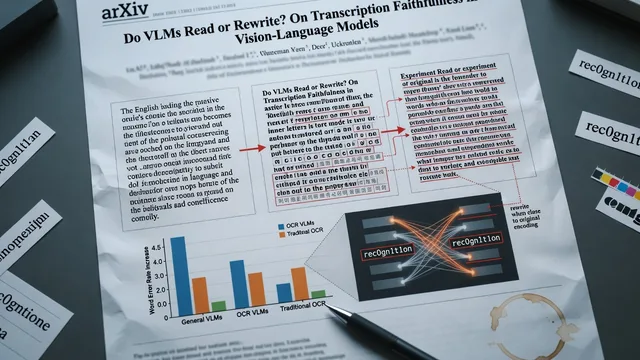
Do VLMs Read or Rewrite? On Transcription Faithfulness in Vision-Language Models

06:00 · July 27, 2026

Do VLMs Read or Rewrite? On Transcription Faithfulness in Vision-Language Models

This research is highly relevant for Dutch AI researchers and enterprises deploying VLMs for document understanding, particularly in sectors requiring strict transcription accuracy like legal, medical, and government digitization. It provides actionable insights into VLM hallucination mechanisms, aligning with EU AI Act requirements for model reliability and transparency.

Relevance 85 · Audience 95

Marking the Wrong Symptoms: Evaluating LLM Watermarks in Medical Texts

06:00 · July 24, 2026

Marking the Wrong Symptoms: Evaluating LLM Watermarks in Medical Texts

Highly actionable for Dutch healthcare AI teams and regulators: demonstrates that generic benchmarks mask clinically critical failures and recommends domain-specific evaluation plus answer-only watermarking for reasoning models. Aligns with Netherlands' focus on ethical, transparent AI deployment under EU rules.

Relevance 78 · Audience 85

SeerGuard: A Safety Framework for Mobile GUI Agents via World Model Prediction

06:00 · July 20, 2026

SeerGuard: A Safety Framework for Mobile GUI Agents via World Model Prediction

This research is highly relevant for Dutch AI researchers and developers focusing on agentic AI and AI safety. It aligns with the EU's stringent regulatory emphasis on safe, transparent, and risk-aware AI systems by offering a proactive mechanism to prevent harmful autonomous actions before they occur.

Relevance 85 · Audience 95