AgentStream: How Well Do Self-Evolving LLM Agents Perform Under Streaming Tasks?
06:00 · August 4, 2026 · arXiv cs.AI RSS

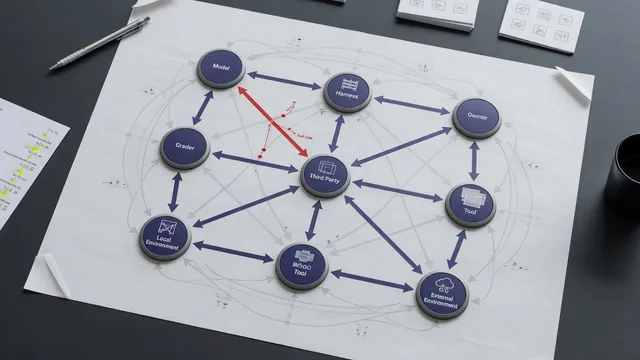
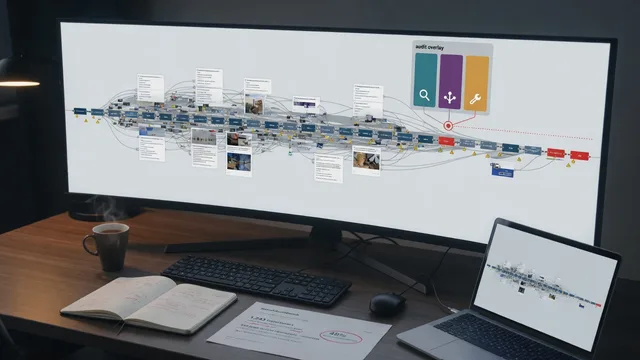
Large language model (LLM) agents can self-evolve by continually improving from their own accumulated experience. However, existing studies predominantly adopt independent evaluation. Consequently, the behavior of self-evolving agents in realistic streaming settings, where agents adapt to diverse and complex task streams, remains poorly understood. To address this gap, we introduce AgentStream, a unified framework that evaluates self-evolving agents spanning diverse evolution components by organizing agentic benchmarks into a configurable task stream and instantiating the \texttt{Isolated}, \texttt{Sequential}, and \texttt{Interleaved} streaming scenarios at test time, which progressively vary the scope and domain composition of the stream. Over these scenarios, we combinatorially evaluate five representative self-evolving methods across three frontier foundation models, disentangling how model capability, method architecture, and streaming scenario jointly shape self-evolution. Our results show that self-evolution reliability varies across streaming scenarios, the benefit of self-evolution is gated by model capability and non-monotonic in model strength, and no single method dominates across models and scenarios. These findings offer concrete guidance for selecting self-evolving methods across models and streaming scenarios. Overall, we advocate that self-evolving agents should be evaluated under realistic task streams rather than isolated single-task settings.
Summary
AgentStream addresses a key limitation in current research on self-evolving LLM agents, which typically improve through accumulated experience yet are assessed only on isolated tasks without cross-task state. The framework instead assembles tasks from multiple agentic benchmarks into configurable streams and tests agents under three progressively more demanding scenarios. Isolated streams keep each benchmark separate, Sequential streams feed benchmarks in fixed order while preserving evolution state, and Interleaved streams shuffle tasks from all benchmarks into a single mixed sequence.
The evaluation covers five representative self-evolving methods that update different components—context, memory, skills, or an integrated harness—across three frontier models and six benchmarks spanning tool use, web navigation, software engineering, and knowledge-intensive reasoning. Results show that self-evolution does not deliver uniform gains. Performance reliability drops from Isolated to Sequential streams, though Interleaved streams sometimes outperform Sequential despite greater domain mixing. Gains also depend on base-model strength: weaker models can suffer negative effects, and improvement is non-monotonic, with mid-tier models occasionally benefiting more than stronger ones.
No single method proves superior across all conditions. Context-integrated approaches tend to suit within-domain streams, while retrieval-based methods handle cross-domain streams more effectively. The optimal choice further varies by model rather than transferring reliably between them. The study therefore recommends applying self-evolution only to sufficiently capable models, matching method type to stream composition, and selecting methods individually rather than assuming a universal solution.
Why it matters
This research is highly relevant for Dutch AI researchers developing autonomous LLM agents, providing a rigorous framework for evaluating continuous learning in realistic deployment scenarios. Understanding how model capabilities gate self-evolution is crucial for building robust and reliable AI systems.